
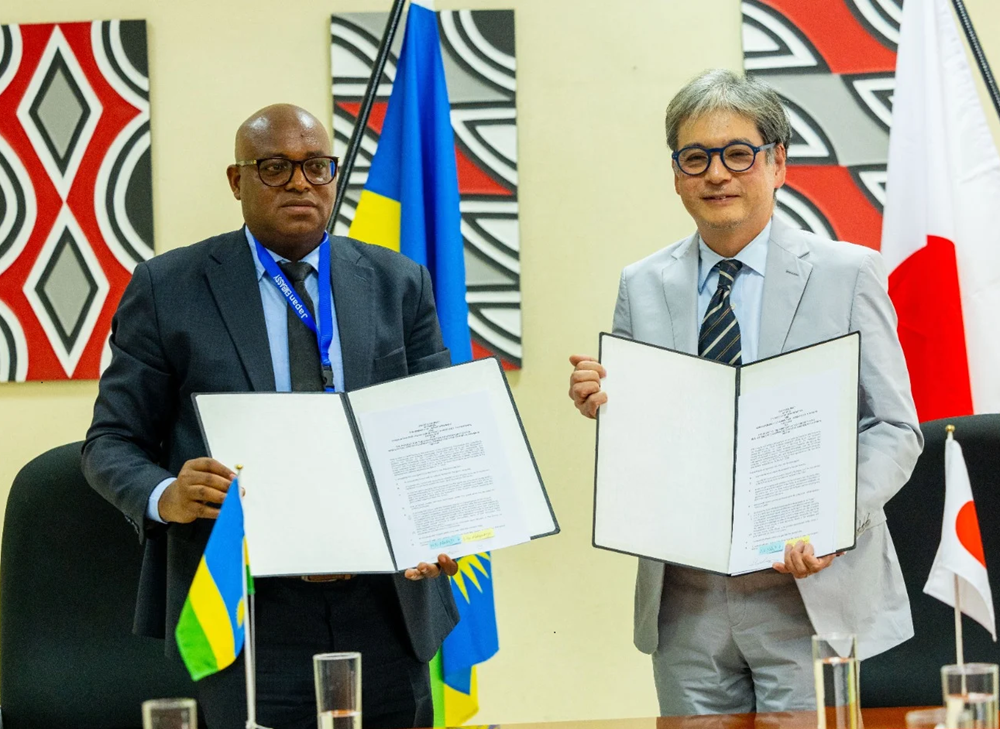
The Government of Japan, through its Embassy in Rwanda, is today signing an agreement with the Association of Volunteers for the Assistance of Disabled Children (AVEH Umurerwa) to support the construction of dormitories for children with mental disabilities.
The agreement is being signed this Monday, January 26, at the Japanese Embassy in Kigali by Japan’s Ambassador to Rwanda, Nakajo Kazuya, and AVEH Umurerwa Director General, Eugene Ndayambaje.
Under the Grant Assistance for Grassroots Human Security Projects (GGP/KUSANONE), the Government of Japan is providing US$89,725 (approximately Rwf 120.45 million) to finance the project.
The funding will be used to construct dormitories with the capacity to accommodate 102 children with mental disabilities.
The project also provides 96 beds with mattresses, essential equipment, 22 bicycles adapted for children with disabilities, as well as 10 mobility and sports equipment items aimed at improving the children’s well-being and rehabilitation.
AVEH Umurerwa, located in Nyamata Sector of Bugesera District, currently supports 120 children with mental disabilities. Of these, only 20 reside at the center due to limited infrastructure, while the remaining children are cared for within their families.
Inadequate housing remains a major challenge, often contributing to setbacks in the children’s progress.
According to AVEH Umurerwa Director General Eugene Ndayambaje, the new dormitories significantly expand the center’s capacity and improve the quality of care provided.
“This grant enables us to build adequate bedrooms and equip them appropriately. It allows AVEH Umurerwa to increase the number of children accommodated at the center from 20 to more than 100, easing the burden on families and the government,” Ndayambaje says.
He explains that children at the center receive comprehensive care based on four pillars: health, education, well-being, and advocacy. The goal is to equip them with self-care skills, enable school attendance, and support their integration into inclusive learning environments alongside children without disabilities.
The children assisted at the center range in age from five to 17 years and present varying levels of disability. Some require assistance with basic daily activities such as feeding, bathing, communication, and personal hygiene.
Japanese Ambassador Nakajo Kazuya says the project reflects Japan’s commitment to supporting vulnerable groups and strengthening community-based care systems in Rwanda.
“Once this project is completed, children requiring long-term care will no longer face challenges related to inadequate infrastructure. Instead, they will have the opportunity to develop their talents and abilities in a safe and supportive environment,” he says.
Construction of the dormitories begins immediately and is expected to be completed within one year.
Through the GGP/KUSANONE program, Japan supports grassroots projects implemented by non-governmental organizations, educational institutions, health facilities, and local authorities. Over the past 36 years, the program has contributed to development in sectors such as water, agriculture, health, and education.
Japan and Rwanda continue to strengthen their partnership, focusing on improving citizens’ well-being and advancing sustainable development goals.
First published in Kigali Today in Kinyarwanda.