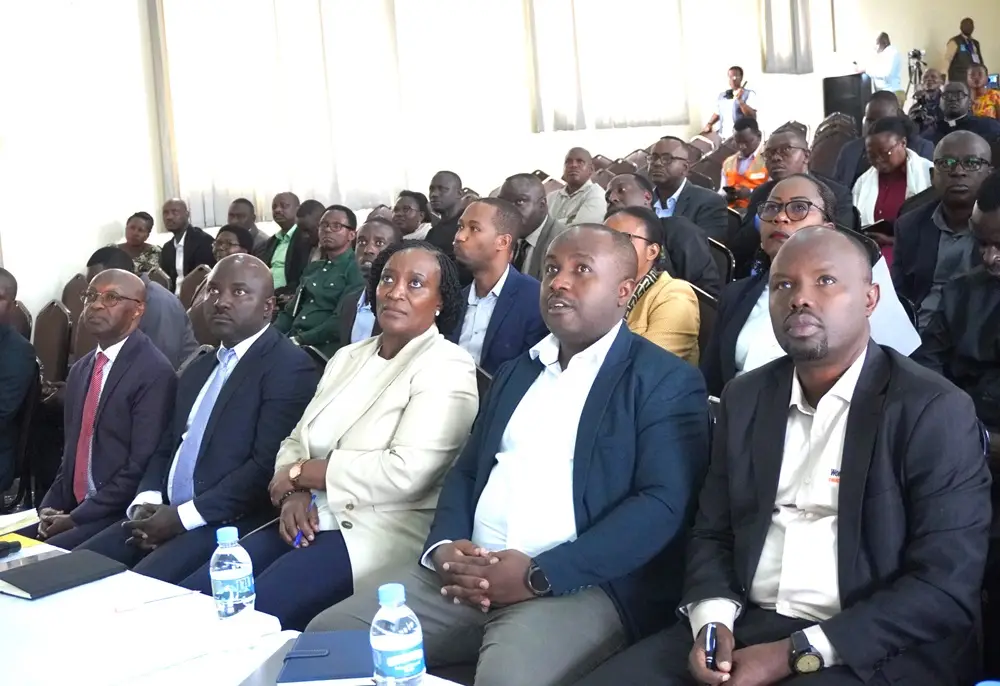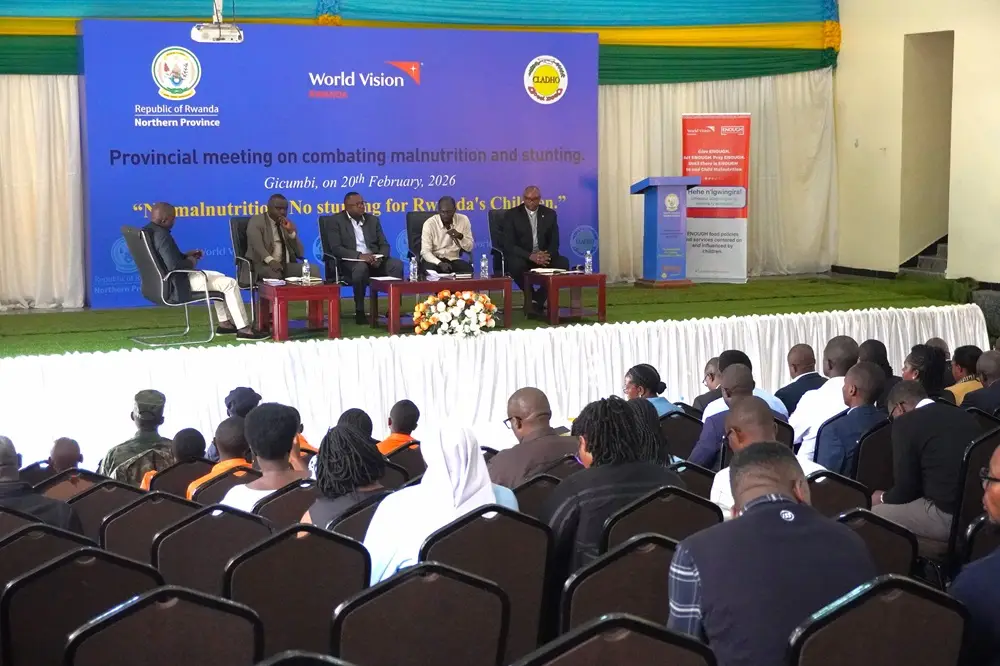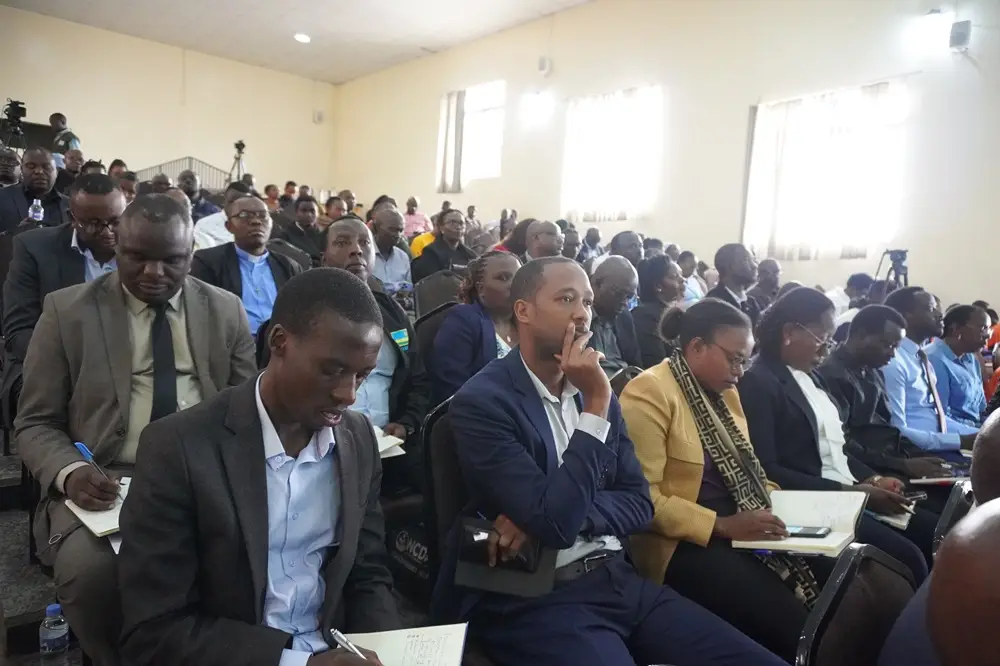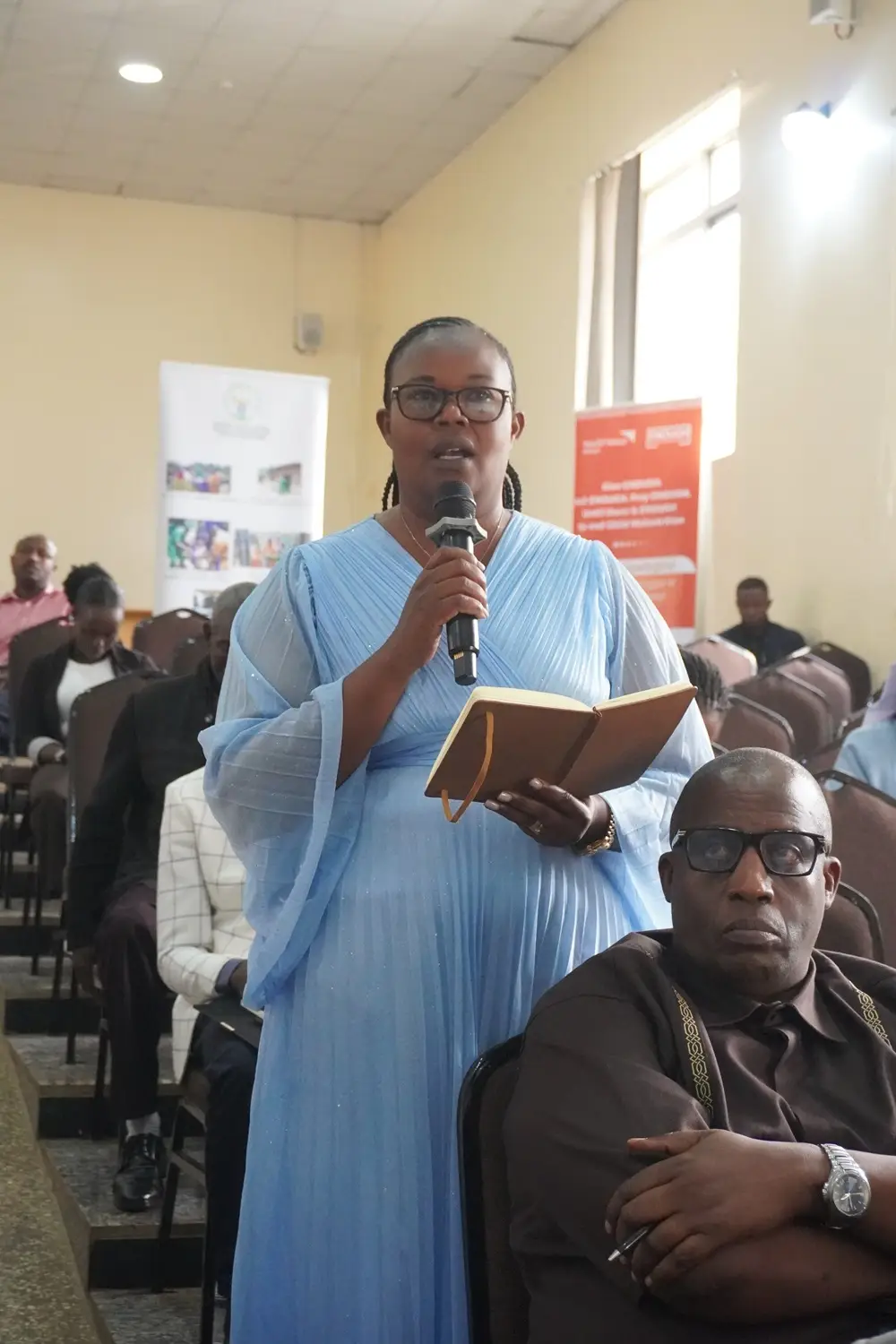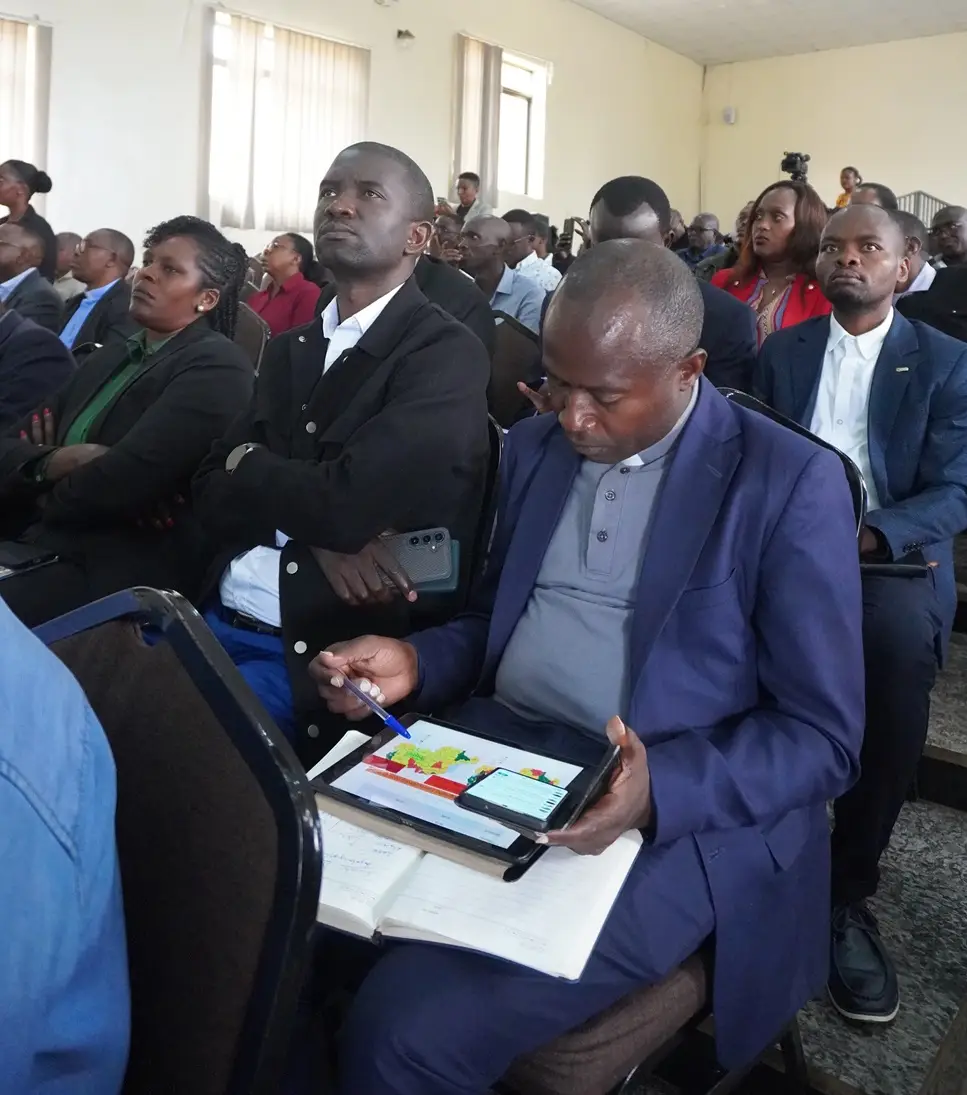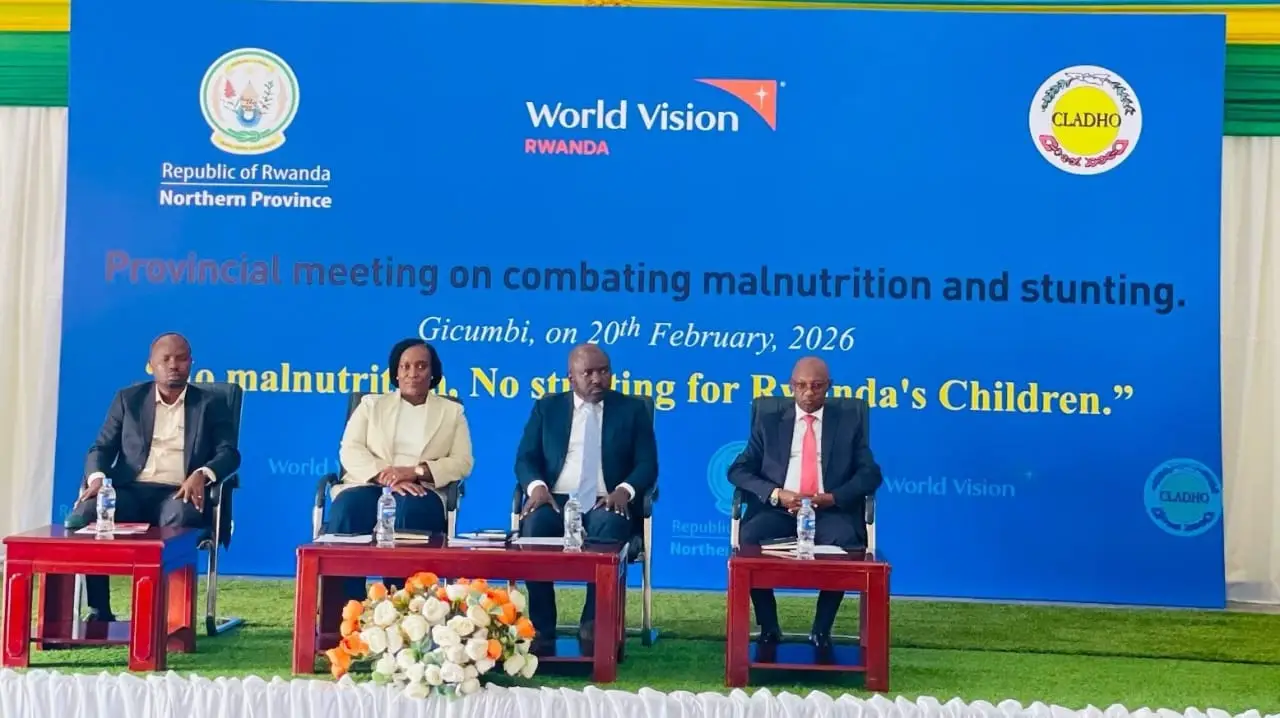

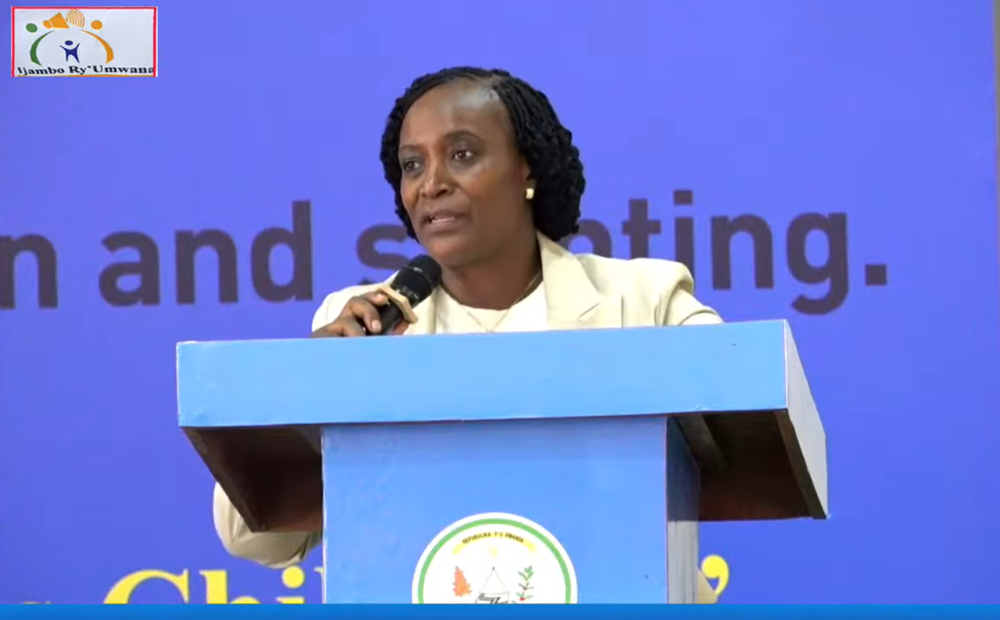
The Minister of Gender and Family Promotion has urged leaders in Rwanda’s Northern Province to take full responsibility in the fight against child malnutrition and stunting, stressing that a region endowed with fertile land, hardworking citizens and strong development partners should not be home to stunted children.
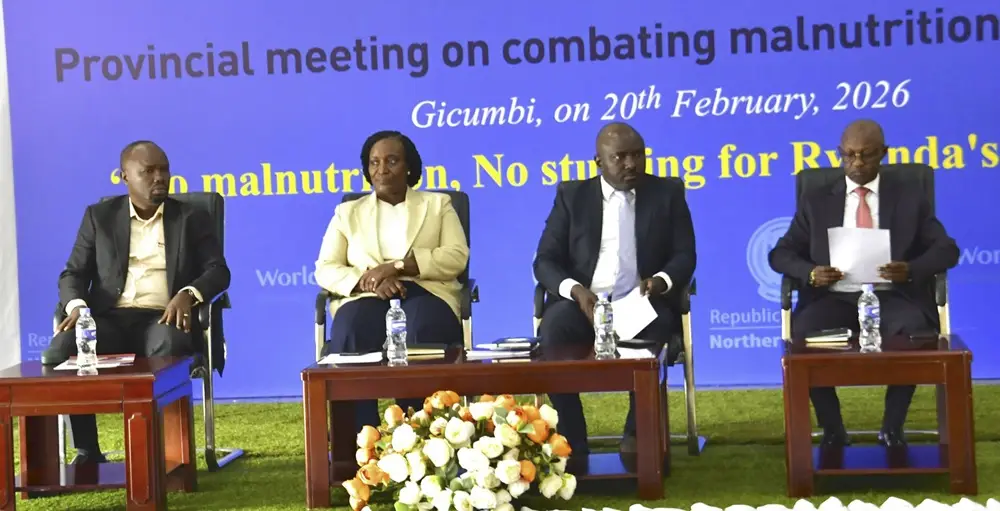
Minister Uwimana Consolée made the remarks during a consultative meeting on malnutrition and child stunting held on February 20, 2026, in Gicumbi, in the Northern Province.
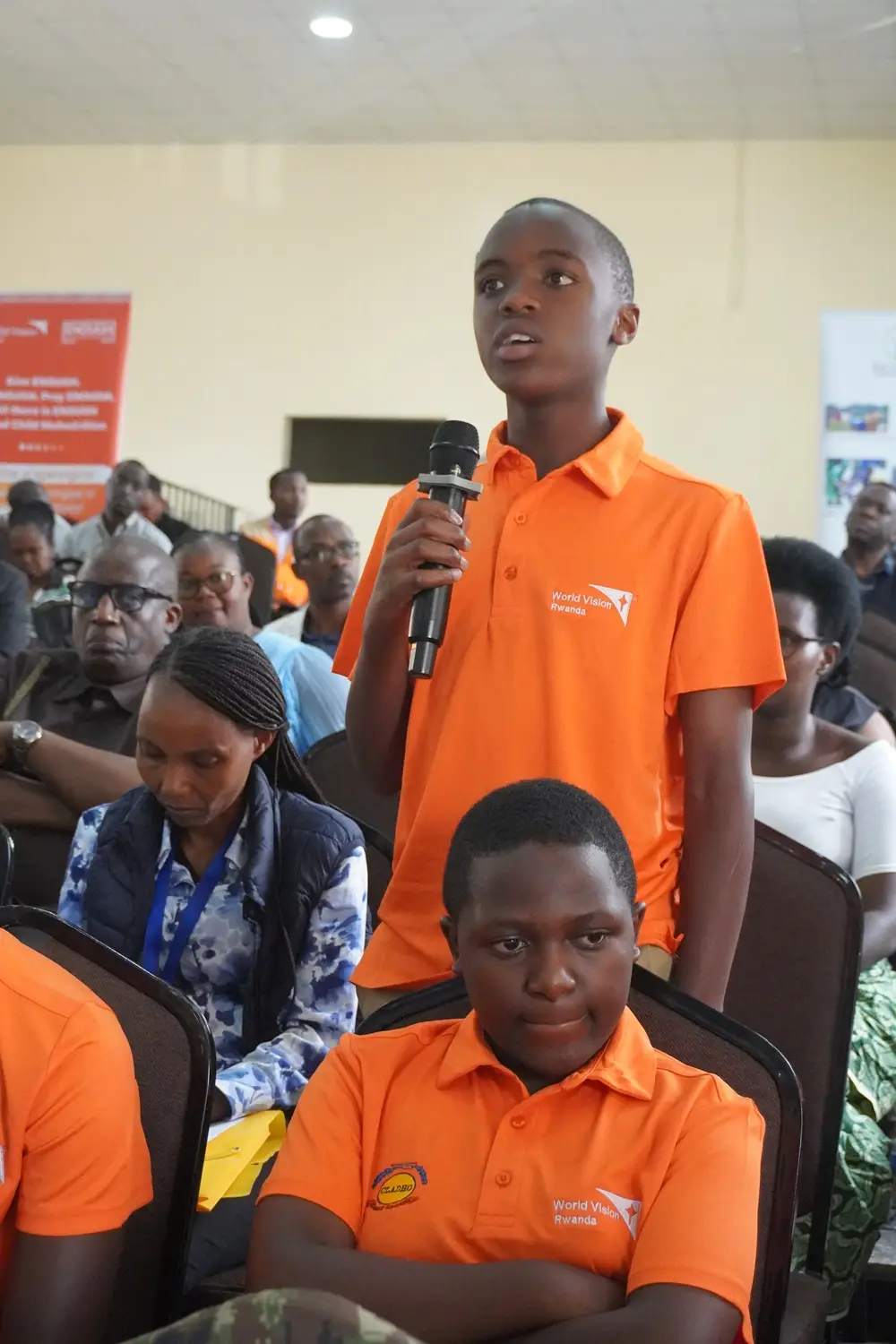
The meeting brought together provincial and district leaders, representatives of faith-based organizations, and non-governmental organizations operating in the region, including CLADHO and World Vision, which co-organized the event with the Province.
The discussion comes shortly after the issue of stunting was raised at the recent #Umushyikirano20, where President Paul Kagame questioned how a district with good agricultural and livestock production could register high levels of child stunting, as is the case in Gicumbi.
From statistics to real action
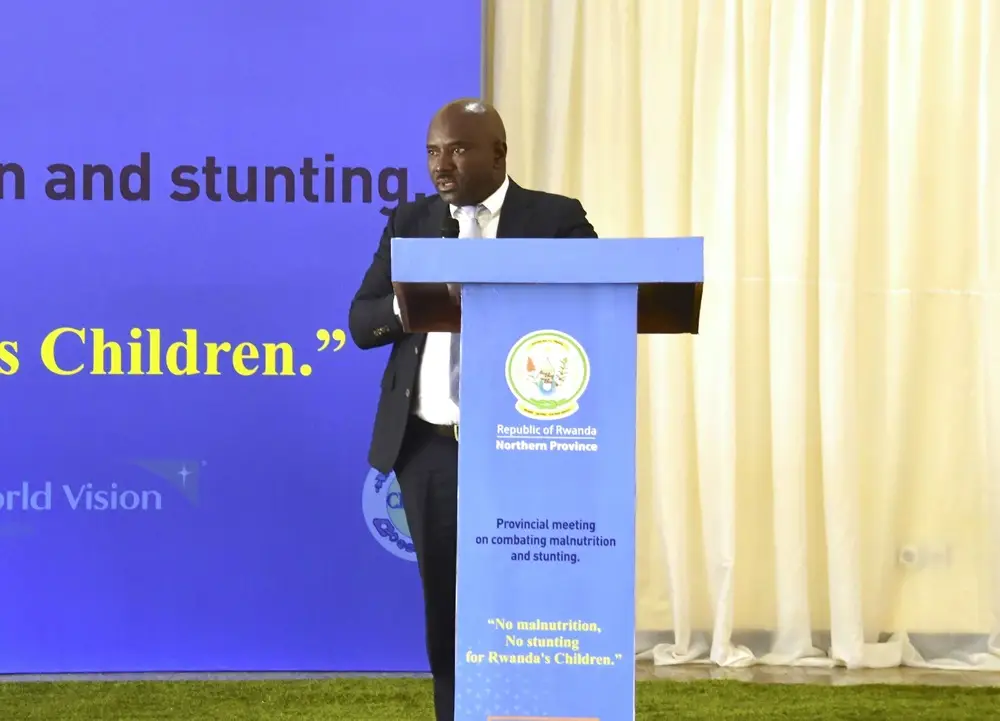
Speaking at the meeting, Northern Province Governor Mugabowagahunde Maurice said the province has adopted community-based strategies to combat malnutrition and stunting, starting at the Isibo (the smallest local administrative unit).
“One of the solutions we believe will be effective is addressing these challenges from the Isibo level,” he said. “We must move beyond numbers to real action. We want to know these children by name, understand the challenges within their families, and collectively take measures to address them.”
He added that some leaders conducted a study visit to Ruhango District, where a leadership initiative known as the “ishuri ry’ubuyobozi” has delivered positive results. The approach is expected to complement the Isibo-based strategy.
Musanze and Gakenke cited as models
Data from the National Institute of Statistics of Rwanda (NISR) show that Musanze and Gakenke districts have recorded significant reductions in child stunting within the Northern Province.
Gakenke reduced stunting rates from 39.3 percent in 2020 to 26 percent by 2025, while Musanze reduced its rate from 45.4 percent to 31.9 percent over the same period.
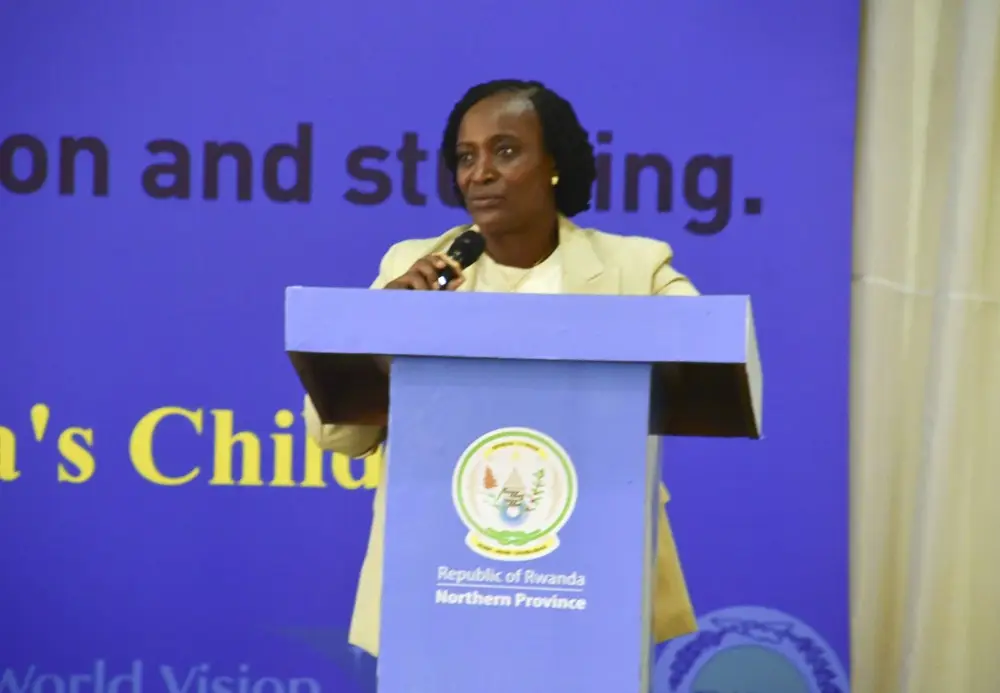
Marie Thérèse Uwamahoro, Vice Mayor in charge of Social Affairs in Gakenke, said child growth monitoring is treated as a shared responsibility across leadership and health institutions rather than being left solely to community health workers.
“We conduct monthly growth monitoring for children, but we do not leave it to community health workers alone,” she said. “Health center staff, district health officials and even the Executive Committee take ownership. We want citizens to see that this is a priority issue for all of us.”
Minister Uwimana commended Musanze and Gakenke for demonstrating that progress is possible.
“I would like to take this opportunity to commend Gakenke and Musanze for reducing stunting. This is proof that change is achievable,” she said. “As a province blessed with fertile land, hardworking citizens and committed partners, we should not continue to see our children stunted while we stand by. Let our collaboration be the pillar that helps us achieve our goal of eradicating malnutrition.”
Strengthening monitoring and hygiene interventions
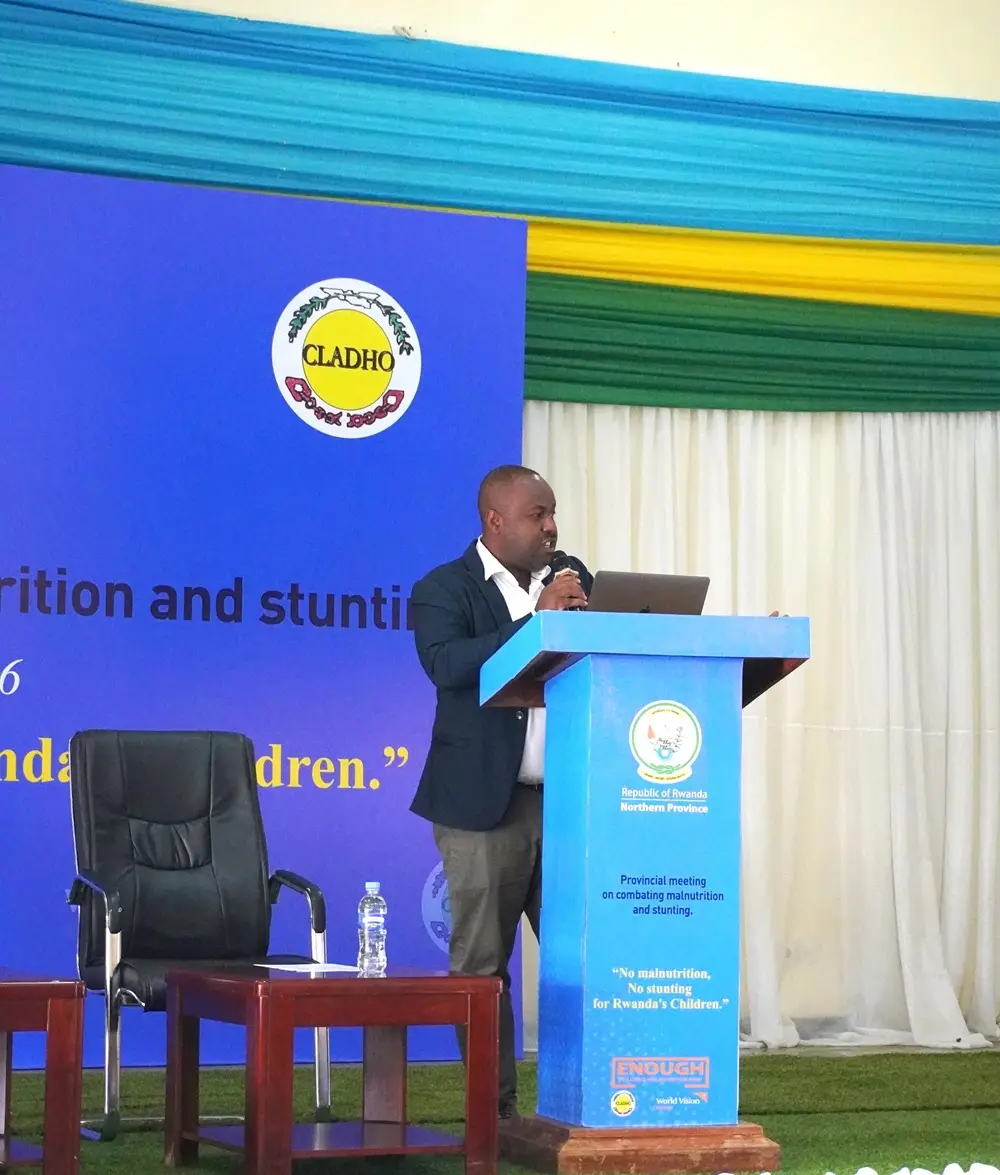
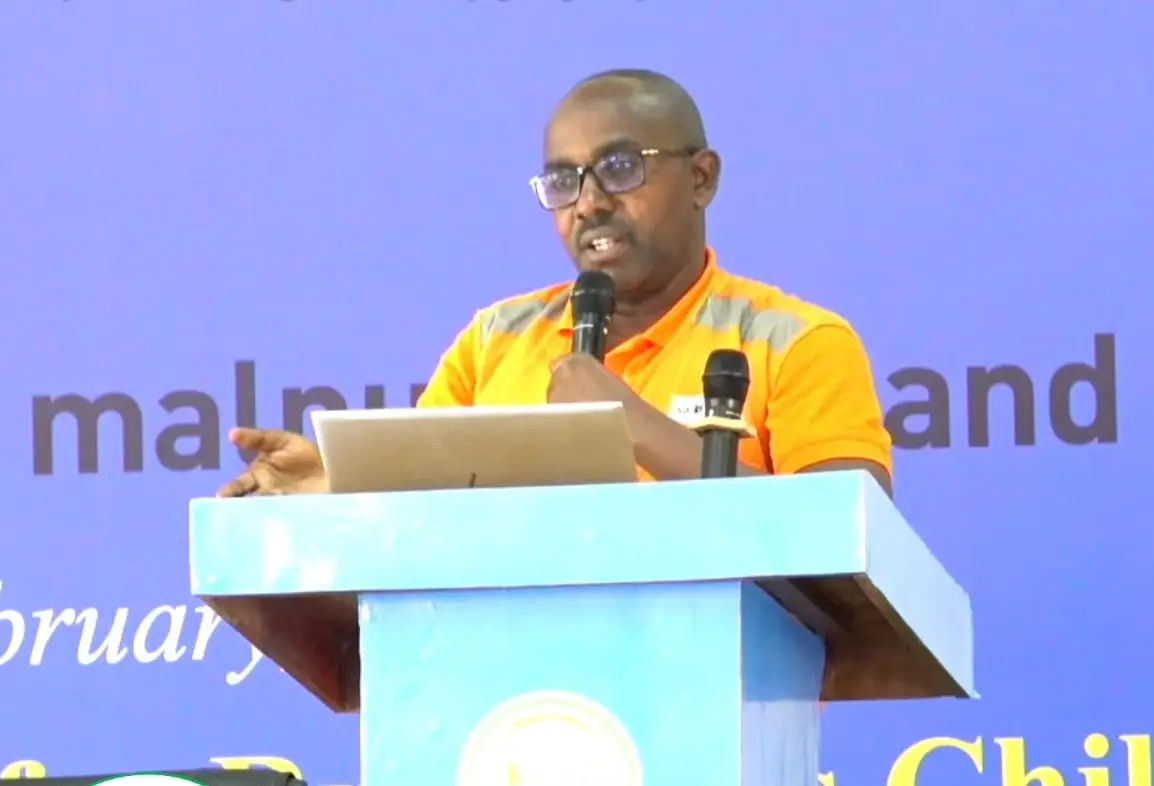
World Vision reaffirmed its commitment to supporting the province’s efforts. Aloys Nsabimana, the organization’s Coordinator for Health, Nutrition, Water, Sanitation and Hygiene programs, said the new five-year strategy will prioritize child growth monitoring and sanitation.
“In the Northern Province, we have several major programs that we will implement in partnership with districts and the province,” he said. “First is timely growth monitoring. Previously, children were measured every three months, but that proved insufficient as some were missed.”
Under the new approach, children under two years will be monitored monthly, and aged two to five will be monitored quarterly. Access to clean water, sanitation and hygiene will be strengthened, teenage pregnancies will be addressed, and Malnourished children will receive early treatment and home follow-up.
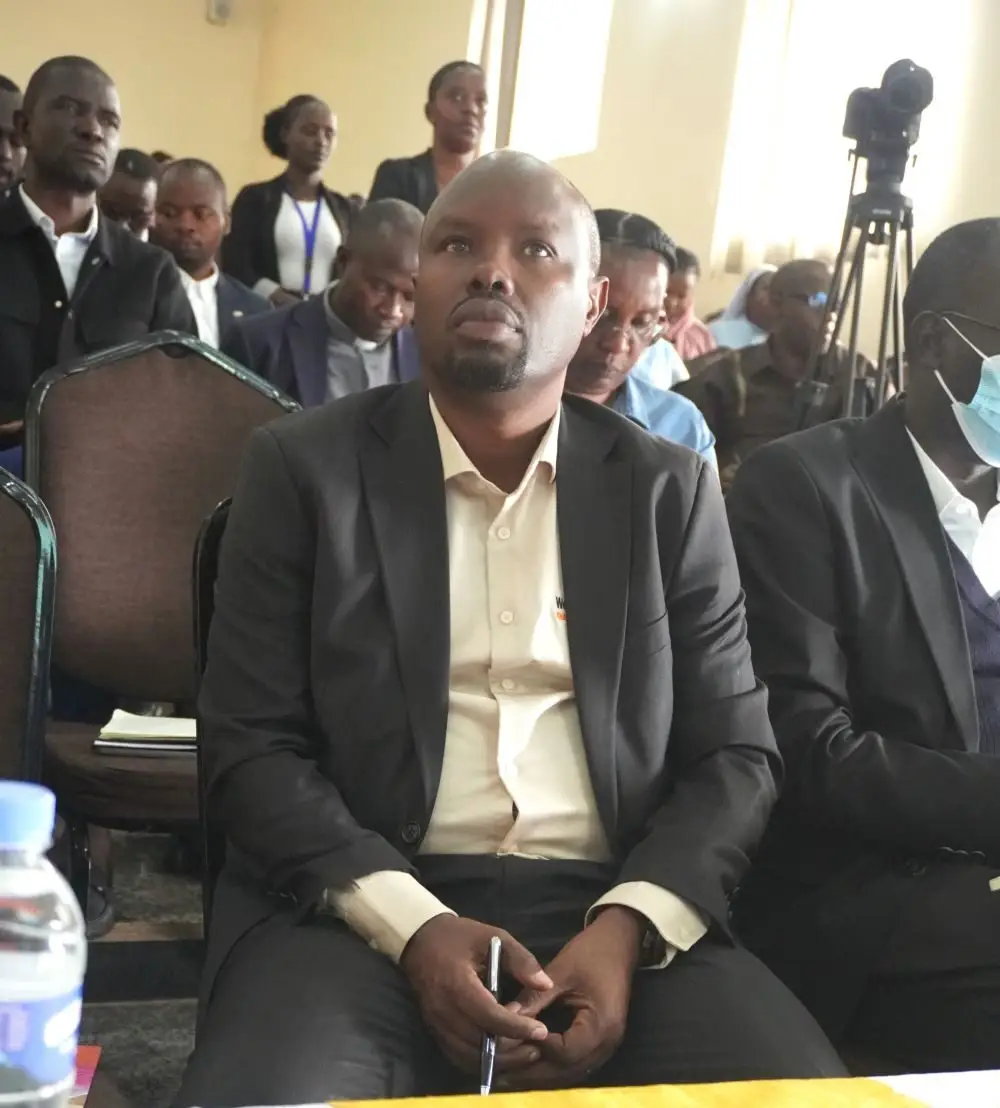
Mutabaruka Innocent, Integrated Program Director at World Vision Rwanda, said the organization’s proven initiatives will be expanded to the Northern Province to accelerate efforts to eliminate stunting through sustained and intensified community campaigns.
He noted, “Over the past two years, we have implemented the ‘Professional Umuganda’ program in the districts of Rutsiro, Ngororero, and Burera. Through this approach, we identify children affected by malnutrition and provide targeted support to help them recover and move out of the red zone. The positive results give us confidence that this model can be successfully replicated in other districts, including Gicumbi.”
Rwanda had set a target to reduce stunting to 19 percent by 2024, but this was not achieved. The current rate stands at 27 percent, with a new goal of reducing it to below 15 percent by 2029.
Research indicates that the primary causes of stunting include inadequate diets and poor hygiene practices in food preparation, serving and consumption.
Studies further show that only 43.5 percent of children aged six to 24 months in Rwanda receive a minimum acceptable diet. Meanwhile, children between one and four years old are frequently affected by intestinal worms and diarrhea, conditions that significantly contribute to stunting.