

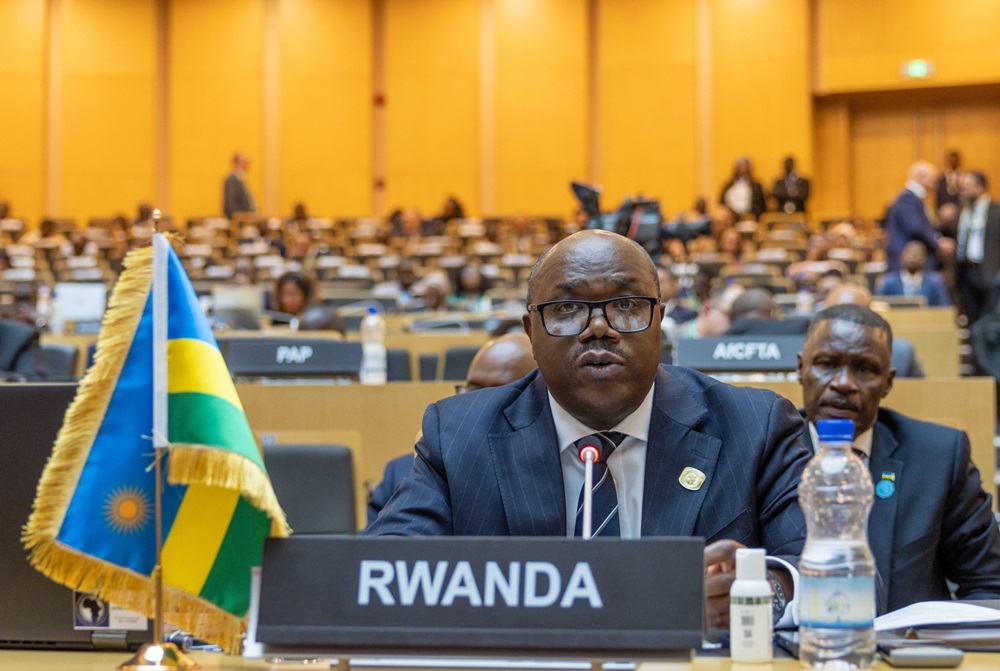
Prime Minister Dr. Justin Nsengiyumva has underscored maternal and child health as a cornerstone of national development, telling African countries that no nation can claim progress while women continue to die during childbirth.
He made the remarks on February 14 during the 39th Ordinary Summit of the African Union (AU), at a high-level session themed: “From Commitment to Impact: Accelerating the Reduction of Maternal Mortality in Africa.”
He stated: “No country can claim genuine progress if women continue to die while giving life. Maternal survival is one of the clearest indicators of the strength of a health system, the effectiveness of public services, and the dignity with which a nation treats its citizens. In Rwanda, maternal health remains high on the political agenda.”
Nsengiyumva noted that Rwanda’s progress is rooted in significant leadership reforms and improved data use, moving away from five-year survey-based estimates toward continuous and timely data systems.
“For many years, maternal mortality was mainly measured through surveys conducted every five years. These were important, but they did not enable rapid decision-making. They did not provide real-time information on where deaths were occurring, why they were happening, and what needed to change,” he said.
He informed participants that Rwanda now relies on routine national data and digital systems that ensure maternal deaths are reported within 24 hours, followed by prompt reviews and corrective actions at health facility, district, and national levels.
This is supported by a strong health system framework linking community health workers, health posts, health centres, and hospitals.
Postpartum haemorrhage remains the leading cause of maternal deaths, alongside major newborn complications such as prematurity and birth asphyxia.
He emphasized that addressing these challenges requires strong political will and a well-structured, functional health system.
“It requires political commitment, strong frontline services, quality emergency care, and a culture of continuous learning supported by data — all anchored in leadership and accountability,” he said.
He added that Rwanda has institutionalized the Maternal Death Surveillance and Response system, ensuring that every maternal death is reviewed and lessons are translated into practical improvements in service delivery and performance.
Globally, an estimated 14 million women experience postpartum haemorrhage each year, 90 percent of them in developing countries. Of these, approximately 70,000 lose their lives annually.
According to data released in December 2025 by the National Institute of Statistics of Rwanda (NISR), Rwanda has recorded a decline in both neonatal and maternal mortality rates.
The neonatal mortality rate decreased to an average of 17 per 1,000 live births, down from 19 per 1,000 in 2020.
Meanwhile, the maternal mortality ratio dropped to 149 per 100,000 live births, from 203 per 100,000 in 2020. The national target is to reduce it to 70 by 2030.