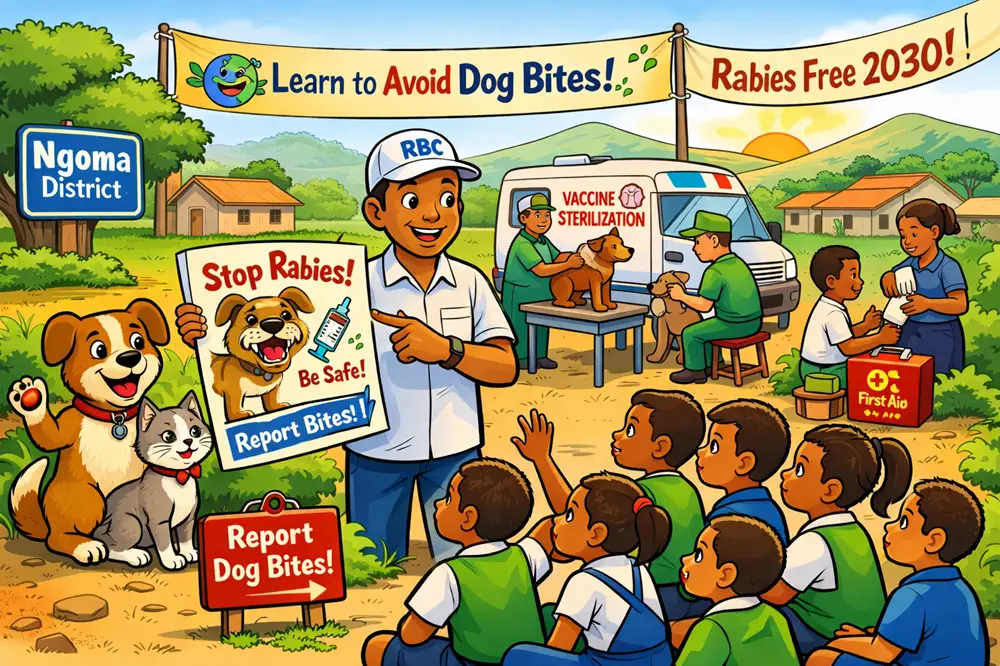

The Rwanda Biomedical Centre (RBC) has intensified its nationwide efforts to reduce dog bites and prevent the spread of rabies, with a renewed focus on educating children in high-risk communities.
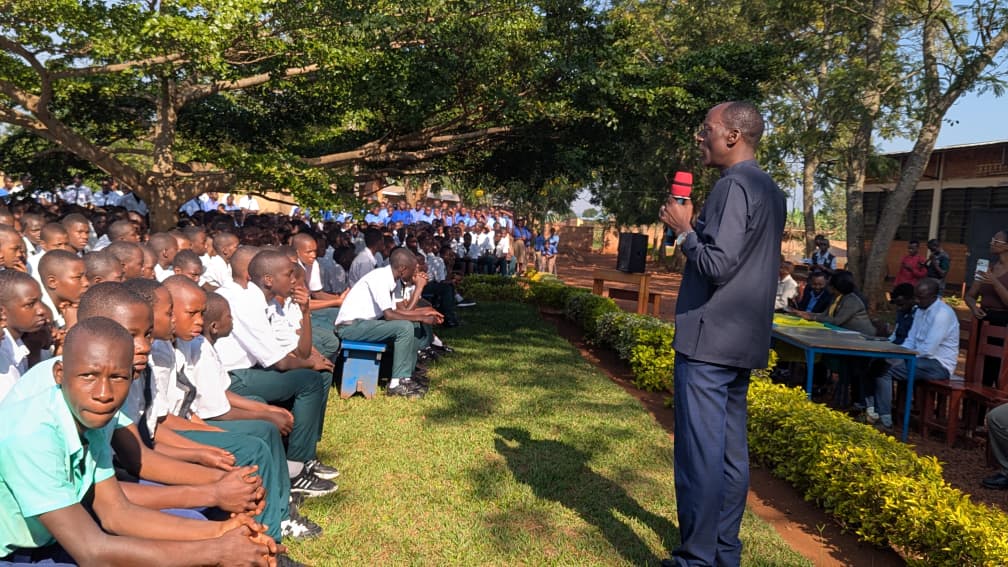
The latest campaign was conducted on January 26 at GS Gasetsa and Ndekwe schools in Ngoma District, targeting students and pupils who are among the most vulnerable to dog bites. According to health data, children account for approximately 40 percent of all dog bite victims in the country.
Health officials say children are particularly at risk because they are more likely to play with pets such as dogs and cats, often without fully understanding animal behavior, warning signs, or the dangers of rabies transmission following a bite.
The initiative comes ahead of the 2026 World Neglected Tropical Diseases (NTDs) Day celebration, scheduled for January 30 in Ruhango District, which will highlight Rwanda’s progress in combating NTDs, including rabies.
During the awareness sessions, students were educated on how rabies is transmitted, practical ways to prevent dog bites at home and in public spaces, immediate first aid measures following a bite, and the importance of promptly reporting cases to health authorities.
The World Health Organization (WHO) recommends that countries conduct annual dog censuses, vaccinate at least 70 percent of the dog population, and sustain public awareness campaigns to eliminate rabies by 2030.
Nathan Hitiyaremye, NTD-WASH Coordination Officer, emphasized that through collaboration with partners such as the Rwanda Agricultural Board (RAB), the Ministry of Education, and the Rwanda NGOs Forum, the country is well-positioned to meet — and potentially exceed — these targets.
Although Kigali has the highest dog population nationwide, official statistics show that the Eastern Province records the highest number of dog bite cases. Of the 1,172 cases reported nationally, the Eastern Province leads, followed by the Southern Province (616 cases), Western Province (517), Kigali City (480), and Northern Province (442).
At district level, Nyagatare records the highest number of incidents with 392 cases, followed by Huye, Gasabo, Gatsibo, and Musanze.
Ngoma District, where the latest campaign was launched, has reported 176 cases — a figure authorities attribute to proactive compliance with WHO guidelines.
In 2025, Rwanda recorded 3,227 dog bite cases and five confirmed rabies infections, including one in Ngoma District.
“We are prioritizing community education, particularly among children, and encouraging districts to conduct dog censuses to accurately determine vaccine needs as we work toward zero rabies,” Hitiyaremye said.
Animal welfare organizations are also stepping up efforts. Welfare for Animals Guild (WAG) Rwanda plans to conduct dog population management activities in Ngoma District from January 29 to February 2, 2026.
Dr. Emmanuel Nzabamwita, a veterinary doctor with WAG Rwanda, noted that since 2024, the organization has vaccinated over 1,000 dogs and sterilized or castrated 400 as part of broader rabies prevention efforts.
“We are focusing on population control because many stray dogs result from abandonment by owners,” Nzabamwita explained.
Addressing Knowledge Gaps
Ngoma District has a long-standing culture of dog ownership, with many households keeping dogs and cats as pets. However, officials acknowledge that knowledge gaps persist regarding animal behavior and rabies prevention.
These gaps had tragic consequences in 2025 when a mother died after reportedly being bitten by a stray dog. The case was neither reported nor treated in time.
Students Sandrine Umunyana and Deogratius Hirwandame said the campaign helped address widespread misconceptions and equipped them with practical skills to respond to dog bite incidents and raise awareness within their families.
Ngoma District Vice Mayor for Economic Affairs, Cyriaque Nyiridandi Mapambano, confirmed that an investigation into the fatal case is ongoing.
“We do not yet know the owner of the dog involved, but whoever is responsible will be held accountable,” he said.
The district has so far recorded 948 dogs and 374 cats across its 373 villages and plans to update these figures ahead of a comprehensive vaccination and sterilization drive.
Ngoma’s strategy centers on four pillars: continuous dog census activities, vaccination, sterilization, and sustained community mobilization to promote responsible pet ownership and reduce rabies-related deaths.
Vice Mayor for Social Affairs, Marie Gloriose Mukayiranga, added that authorities are working with RAB and RBC to relocate stray dogs to rehabilitation centers in Kigali.
“We want this campaign to extend strongly to bordering districts, as some communities may not be advancing at the same pace,” she said.